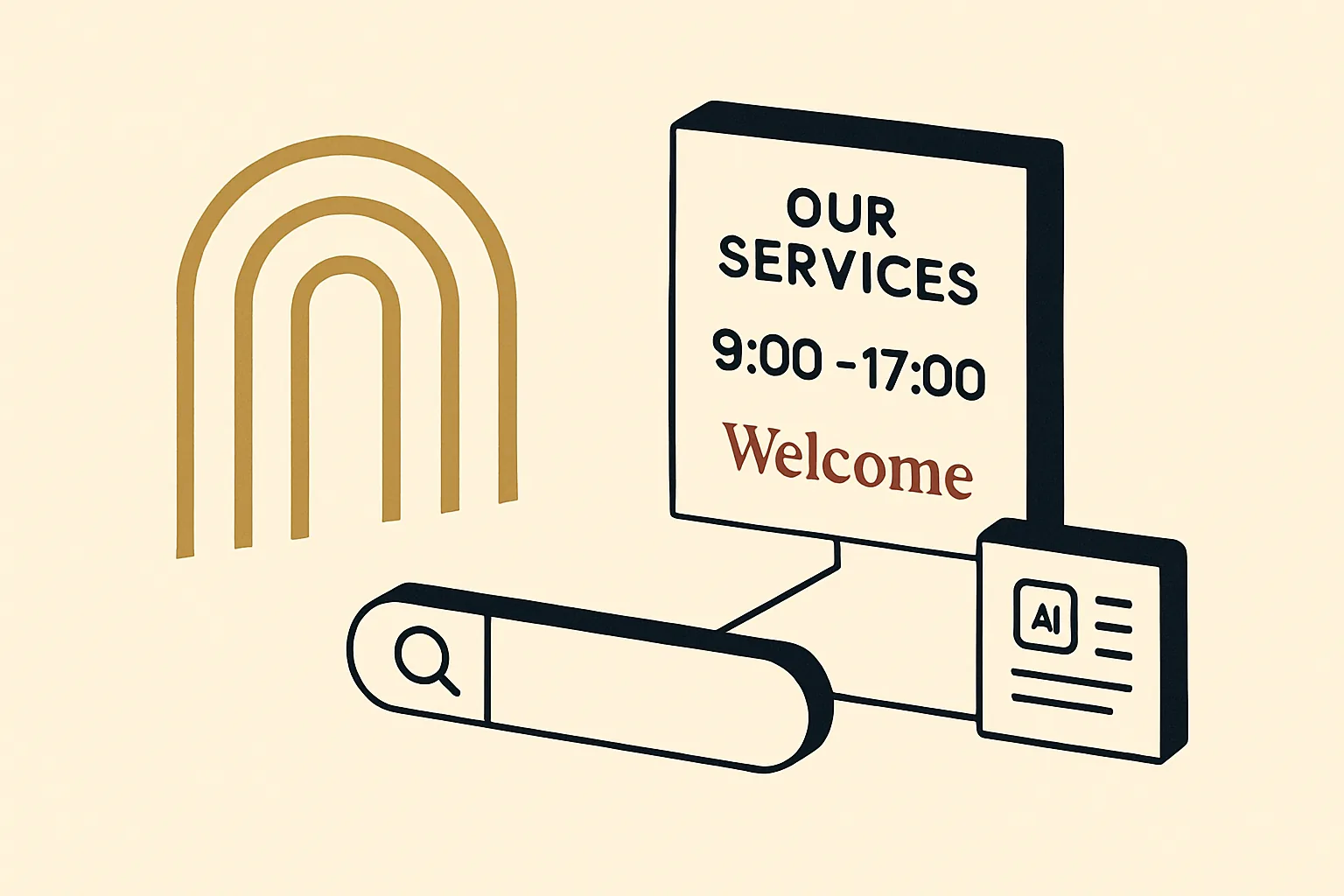
The problem a volunteer-built site quietly creates
Church websites are almost always built with good intentions and very little time. A willing member puts something together, service times go on the homepage, and the site goes live. A year later the times have changed, the events listing is three terms out of date, and the giving page throws an error on mobile.
The congregation knows the details. Newcomers searching online do not. A family moving to the area types “church near me” or asks an AI assistant for a welcoming local congregation. They land on a page that looks abandoned, cannot find when the service starts, and try the next result.
This is not a technology problem. It is a welcome problem. The site is the first impression for anyone who does not already know you, and it is the moment they decide whether to walk through the door.
What decides whether a newcomer finds your church
Search engines and AI assistants draw their answers from a combination of signals. For a local church, three things matter most: a verified and accurate Google Business Profile (your name, address and service times in map results and AI answer cards); a site that works on every device, because the person searching on a Sunday morning is on their phone; and clear, structured information about service times, what to expect on a first visit, and whether children are welcome.
Our local SEO work covers all three. Our web design work makes sure the underlying site supports them.

The AI visibility angle for churches
This is the pattern we see: someone relocates, or someone who stopped attending church considers returning. They do not go to Google and scroll through ten links. They open ChatGPT or a similar assistant and ask: “Is there a welcoming church near me in [town]?” The answer names two or three congregations. The rest are not mentioned.
Being named in that answer is not about advertising or paid placement. It comes from having an accurate, well-structured presence that AI engines can read and trust. Your denomination, your style of worship, what makes your community distinct, your service times and your welcome message: all of it feeds into whether an AI engine names you or skips you.
This is the same pattern we explain in our AI visibility work. For churches the stakes are specific: a newcomer asking that question is often genuinely open to a community. The church that appears with a clear, current answer gets the visit. The church that does not appear has no chance to extend a welcome at all.
Every potential newcomer asks a version of the question twice: once of an AI engine, quietly, on a phone. Once, implicitly, by walking through someone else’s door instead of yours. The gap between the two answers is the gap your digital presence either closes or widens.
What a Diagnostic looks at for a church
A Diagnostic for a church is a measured audit of where you stand across Google and the AI engines. It covers whether your Google Business Profile is claimed and accurate, how your site performs on mobile, whether AI assistants can find and correctly describe your congregation and service style, and which specific changes would have the highest impact on local and AI search results.
You receive the findings as a clear briefing, not a dashboard. The methodology is set out on our methodology page.

Low-maintenance by design
Volunteer-run organisations need sites that stay current without requiring a developer. We build to that constraint: service times and events are editable without touching code, giving integrations work on every device, and updating a term schedule takes minutes. The goal is a site your administrator can maintain between sessions, so the information newcomers find is always current.
Where to start
Tell us about your business. We measure where your church stands across search and AI, identify the specific gaps that are turning newcomers away, and tell you what it would take to close them. You see the evidence before you commit to anything further.