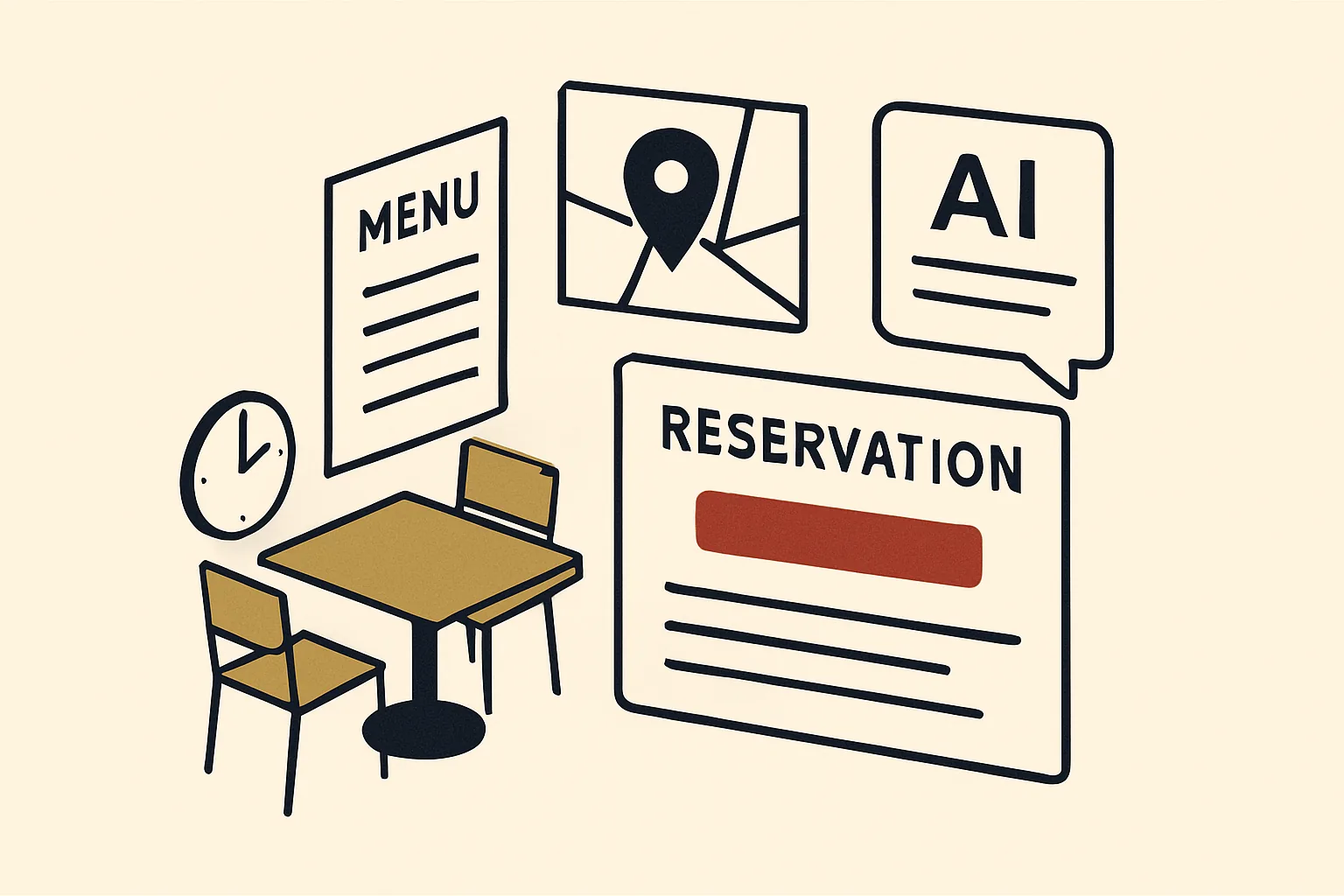
Web Design for Restaurants That Actually Fills Tables

Diners choose where to eat before they leave the house. Most choose the restaurant that appears first on Google, on the map and in the AI answer. We make sure that restaurant is yours.

Request a visibility briefing
The problem

How Restaurants lose enquiries today.

Most restaurants rely on a third-party booking widget, a delivery platform taking a cut, and a Google profile that never gets updated. The web presence is an afterthought. Meanwhile, the "best Italian near me" search and the AI recommendation that follows it quietly send tonight's covers to whoever built the stronger digital presence.

The shift

Are you the answer when AI gets asked?

Diners increasingly ask ChatGPT, Perplexity or Google AI Overviews for a restaurant recommendation before they open a map or a booking site. The answer names three or four places. If your restaurant is not in that answer, you never know the table you did not fill. We work to make sure your name is the one that comes back.

What we do for Restaurants

One partner. The full picture.

We cover your search presence end to end, so enquiries land on one site that the search engines and the AI engines both trust.

01

Restaurant Web Design

A fast, well-structured site with your menu, reservation flow and brand, built so Google can read it, local search can surface it and a diner on a phone can book in under a minute.

02

Restaurant SEO and Local SEO

Google Business Profile optimisation, local-search targeting and review-velocity work so your restaurant appears in the Map Pack when someone searches for your cuisine or area tonight.

03

AI Visibility

We track how AI assistants describe and recommend your restaurant, then work to make sure your name is the one they return when a diner asks for a table.

A restaurant shown as the named local recommendation across search and AI.

The decision is made before the diner leaves home

The question is not whether people search for somewhere to eat. They search constantly. “Best Thai in [town]”, “restaurants near me open now”, “quiet dinner for two in [area].” Those searches happen on phones, in browsers and, with growing frequency, directly in AI assistants.

The question is whether your restaurant is the answer.

Most restaurants are not. The site loads slowly on mobile, the menu is a PDF nobody can read, the Google Business Profile has not been updated since the menu changed, and the booking link goes to a third-party platform that takes commission and owns the customer data. The result is a restaurant that fills on reputation and empties on quiet Tuesdays, when the diners who searched found somewhere else first.

What decides whether your restaurant gets found

  • A site Google can actually read. Your menu, your cuisine type, your location and your opening hours need to live on your own domain in clean, indexable form. A PDF menu and a widget from a booking platform are invisible to Google. Our web design work builds the structure that local search can surface.
  • A Google Business Profile that earns the Map Pack. The three restaurants that appear in the Map Pack when someone searches “restaurants near me” are not there by accident. They have complete profiles, accurate hours, current photos, and a steady stream of recent reviews. That is the foundation of local SEO for restaurants.
  • A presence in the AI answer. When a diner asks ChatGPT or Perplexity for a restaurant recommendation tonight, the answer is assembled from your reviews, your web presence, your third-party mentions and your GBP data. If those signals are thin, you are not in the shortlist. Our AI visibility work builds the footprint the AI engines need to name you with confidence.

Three stacked layers showing site structure, content and AI trust for a restaurant.

The delivery-platform trap

Many restaurants assume that visibility means being on Deliveroo, Just Eat or Uber Eats. Those platforms do drive covers. They also take 20 to 35 per cent of the order value, and they own the customer. The diner knows the platform, not the restaurant. When that relationship ends, the restaurant starts from scratch.

The alternative is not to abandon delivery platforms. It is to build an owned digital presence alongside them: a site that ranks, a Google profile that converts, and an AI footprint that earns recommendations for diners who are choosing where to sit, not where to order from. That is the combination that builds covers you control.

Why “best [cuisine] near me” matters more than your menu

Restaurant discovery is local and intent-now. A diner searching “best Italian in [town]” is ready to book tonight. That search is not decided by who has the most Instagram followers or the prettiest menu design. It is decided by who has the strongest local signals: the right category and cuisine keywords on the site, a complete and fresh Google Business Profile, consistent reviews, and a web presence the AI engines can trust.

The Visibility Briefing we produce for every new client shows exactly which of those signals are working and which are missing. You see where tonight’s covers are going and why, before we make a single change.

How we measure a restaurant’s visibility

We do not open with a redesign or a proposal for a new booking system. We open by measuring where your restaurant stands: how it ranks for the cuisine and area searches that matter, how it appears in the Map Pack, and how the AI engines describe it when a diner asks for a recommendation. That baseline is the scorecard we report against at every cycle.

The approach is set out on our methodology page.
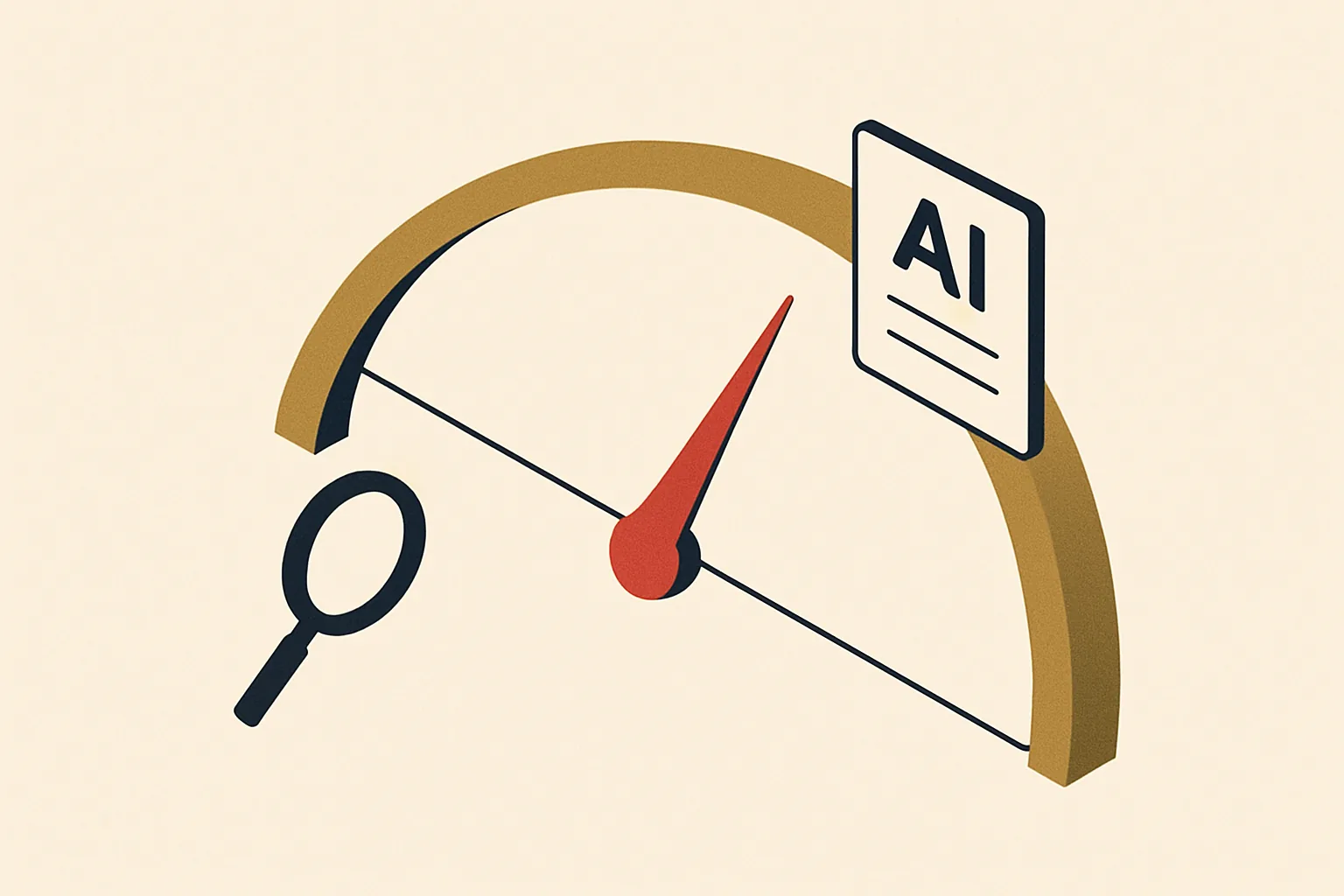
A semicircular visibility meter rising from a search icon to an AI icon, showing a restaurant's discoverability increasing.

Where to start

A Visibility Briefing takes the guesswork out of where you stand. We measure your restaurant across Google, local search and the AI engines diners use to choose where to eat, map the gap between your current presence and the covers you are missing, and show you the specific changes that will make the difference.

The briefing is a clear deliverable with clear findings. You see the evidence before committing to anything ongoing. Start with a Visibility Briefing or read about the marketing approaches we apply for restaurants across the UK.

Proof

Evidence, not promises.

Every Qyliq engagement starts with a measured baseline of where you stand across Google, local search and AI, and ends with a measured result. We show you the working at every step.

Related case study

MOUVE dance school

Read the full case study
Questions

What Restaurants
ask us

Straightforward answers. If yours is not here, ask us directly.

Do I need a website if I already have a Google Business Profile and a booking system?
A Google Business Profile and a booking widget are a starting point, not a web presence. Your own site gives you a menu Google can actually index, a reservation flow you control, and a brand asset that exists outside a platform's terms of service. It is also the foundation the AI engines read when they decide whether to name you in a recommendation.
How do delivery platforms affect my Google ranking?
Delivery platforms like Deliveroo and Just Eat take a significant commission and, importantly, they own the customer relationship. Your Google ranking comes from your own domain, your reviews, your Google Business Profile and the content on your site. The stronger your owned presence, the less dependent you are on platforms that can change their terms at any time.
Why does review velocity matter for a restaurant?
Google's local algorithm treats a steady flow of recent reviews as a freshness signal. A restaurant with 200 reviews and none in the past six months ranks below a newer competitor with 40 reviews posted consistently. We include review-generation guidance as part of local SEO work, because review cadence is one of the clearest signals Google uses to rank local results.
How do I start?
We begin with a Visibility Briefing, a clear picture of where your restaurant appears across Google, the Map Pack and the AI engines that diners now use for recommendations. You see the gap between where you are and where you should be before you commit to anything ongoing.
Next step

Find out where you stand

The Visibility Briefing maps your current position across Google and AI search with evidence, not guesswork. See where you stand before committing to anything.

Request a visibility briefing