SEO for Hotels, Built to Win Direct Bookings

Every room sold through an OTA hands over 15 to 20 per cent of the rate and the guest's contact details. We help UK hotels capture the direct-booking searches and AI recommendations the platforms currently own.

Request a visibility briefing
The problem

How Hotels lose enquiries today.

Most hotels have handed the guest relationship to the OTAs by default. Booking.com and Expedia own the search rankings, take the commission, and keep the data. The hotel's own site sits below the fold, earning the bookings the platforms choose not to take. When occupancy dips, the instinct is to increase OTA commission rather than build the channel that does not charge one.

The shift

Are you the answer when AI gets asked?

Travellers increasingly ask ChatGPT, Claude and Perplexity where to stay before they ever open an OTA. Those engines name a short list of properties. Your hotel is either one of them, or the guest books through a platform that charges for the introduction. We work to make sure your hotel is the named recommendation, before the OTA gets the chance to be the middleman.

What we do for Hotels

One partner. The full picture.

We cover your search presence end to end, so enquiries land on one site that the search engines and the AI engines both trust.

01

Hotel SEO

Page-by-page optimisation for the location and experience searches that bring travellers to your direct booking form, not to a platform listing.

02

Hotel Web Design

Fast, direct-booking-optimised hotel websites that present the experience clearly and convert visitors before they leave for an OTA comparison page.

03

AI Visibility

We measure how the AI engines describe and recommend your property, then work to make sure your hotel is the named answer when a traveller asks.

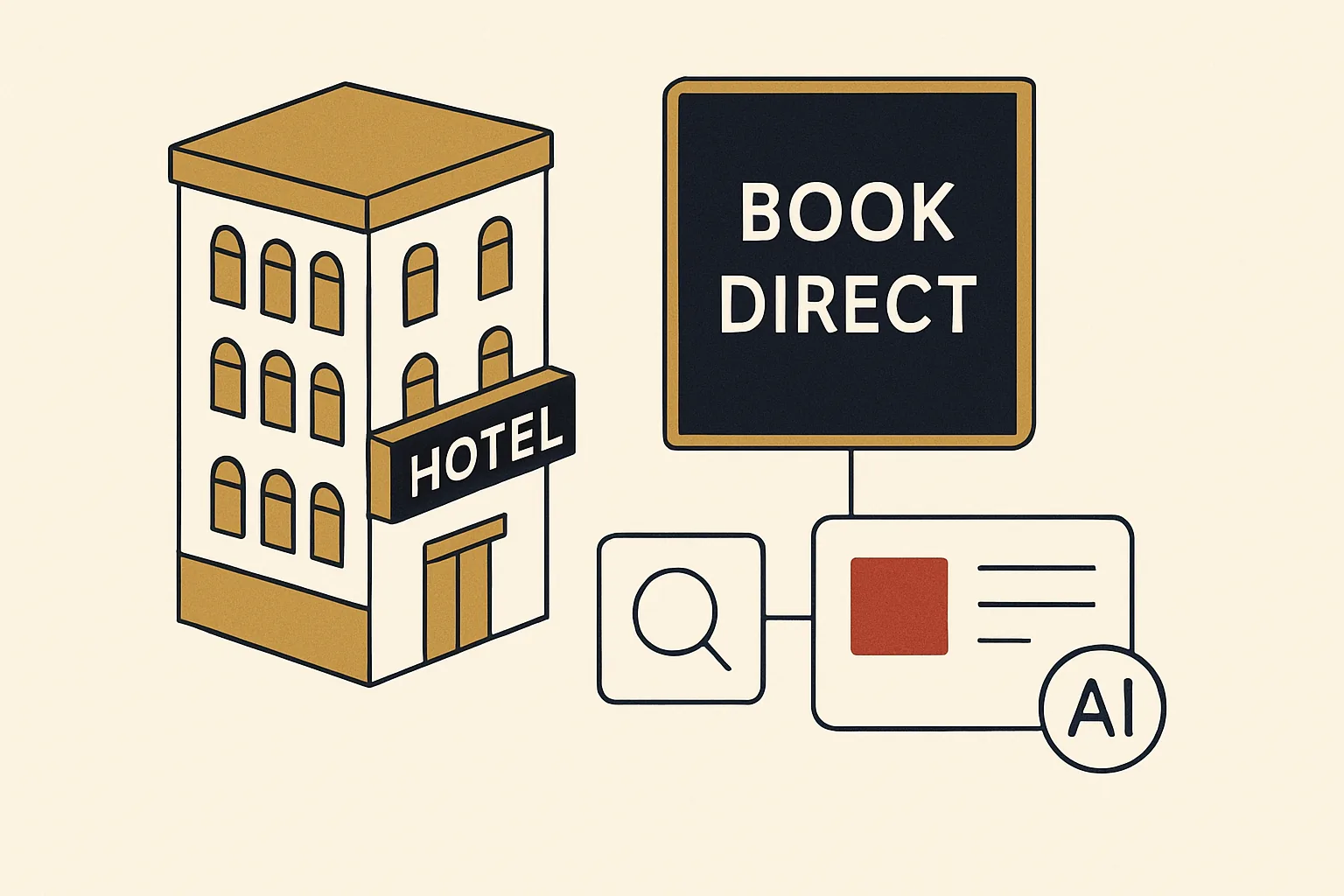
A hotel shown as the named direct-booking choice in search and AI answers.

What hotels lose by leaving direct bookings to the platforms

The OTA model looks like distribution. In practice it is a tax on your own guests.

Booking.com and Expedia charge 15 to 20 per cent commission on every room they refer. They rank above your hotel for searches that include your own name, they keep the guest’s email address, and they use that data to re-market to the same traveller for their next trip. The hotel provides the experience. The platform captures the relationship.

The direct-booking searches that should go to your own site, terms like “hotels in [your town]”, “boutique hotel [your area]” and “where to stay near [local attraction]”, are searches your property could rank for and own. Most hotels do not, because their sites were built to look good, not to be found.

What decides whether your hotel surfaces before the OTAs

The difference between a hotel that earns direct bookings and one that depends on platforms comes down to three things working together.

  • A site built to rank. Fast, clearly structured pages that tell search engines what your property offers, where it is, and who it suits. This is the foundation of our web design work for hotels.
  • Content that captures the right searches. Experience-led guides and booking-intent copy built around the terms travellers actually use, not just your property name. That is the core of SEO for hotels, with the local search work that wins “hotels in [your town]”.
  • A web presence the AI engines can name. When a traveller asks an assistant for a hotel recommendation before opening an OTA, the answer is drawn from your whole footprint: your site, your reviews, your mentions across travel publications and local directories. Our AI visibility work makes sure your property is the named recommendation.

Three stacked layers showing site structure, content and AI trust for a hotel.

The direct-booking gap most hotels do not know they have

A traveller in the planning stage is not yet on an OTA. They are asking an AI assistant which hotel to stay at, or searching for the best place to stay in a specific area. That is the moment most hotels are invisible.

The gap appears in two places:

  • Location and experience searches where your hotel could rank but does not, because the site lacks the structured, crawlable pages that would earn the position.
  • AI engine answers where ChatGPT, Claude or Perplexity names three or four properties and yours is not among them. The traveller books one of those. You never see the booking you did not get.

This is the same pattern we cover on our page about why businesses appear in Google but not in AI search. For hotels it is sharper, because a traveller who asks an AI assistant for a recommendation is usually ready to book, and the first named property earns the most attention.

The asked-twice problem in hospitality

Your hotel’s differentiation is now decided in two places, not one.

The first is your own site: the rooms, the location, the experience, the reasons to book direct. The second is what an AI engine says when a traveller asks. Those two answers are often very different. Your site describes the property carefully. The AI engine names three other hotels and leaves yours out, because the signals it reads from your wider footprint are too thin to compete.

A Visibility Briefing measures both answers, shows you the gap, and identifies the specific work that closes it. You see the evidence before committing to anything ongoing.

How we measure hotel visibility

We do not open with a redesign or a keyword report. We open by measuring where your property stands: how it ranks for the direct-booking and location searches that matter, and how often the AI engines name it when a traveller asks for a hotel recommendation in your area. That baseline becomes the scorecard we report against every cycle.

The approach is laid out on our methodology page. Every round of work re-measures the same signals so the direction of travel is legible, not a matter of interpretation.
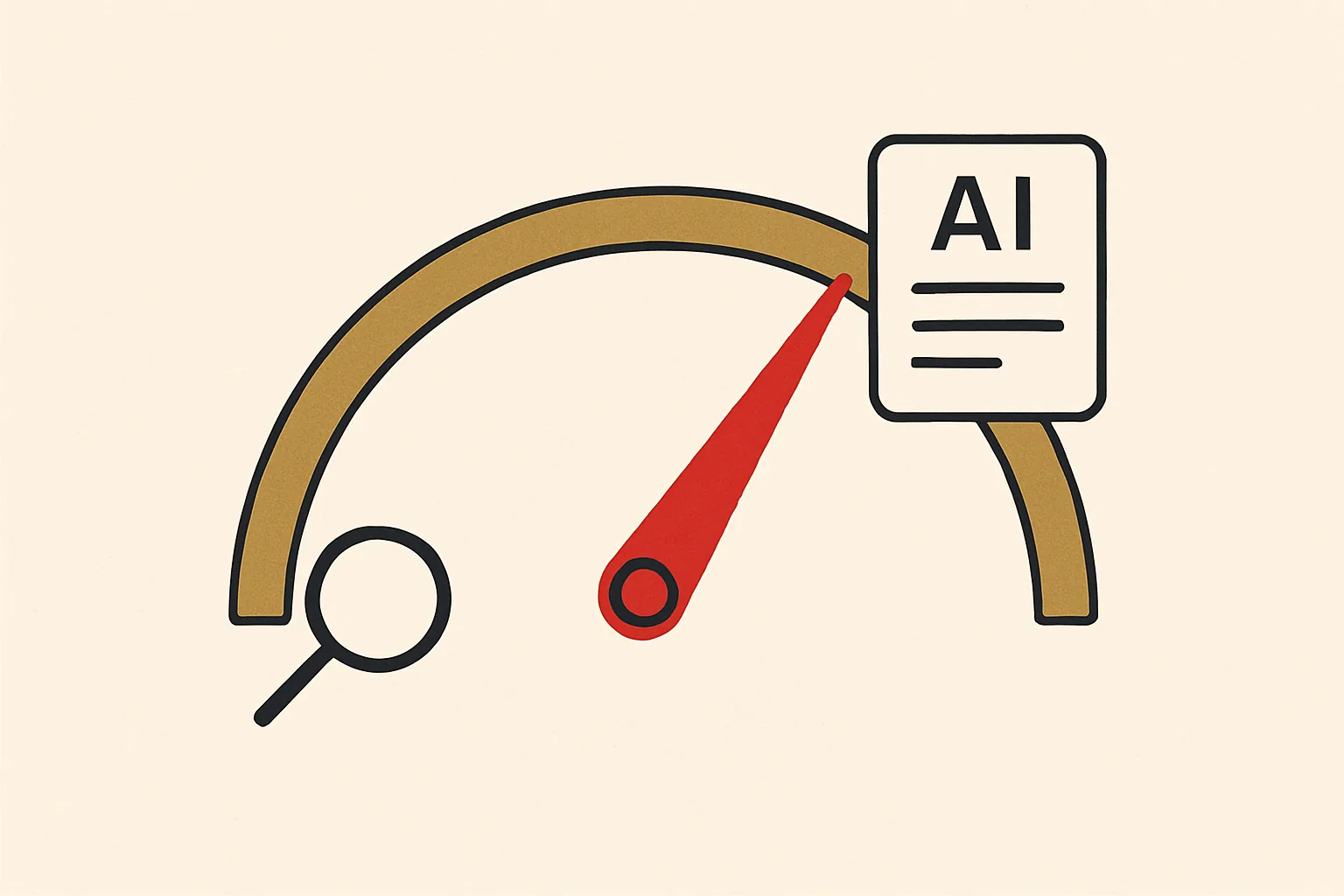
A gauge showing hotel visibility rising from a search icon to an AI answer card.

Where to start

We start with a Visibility Briefing: a measured picture of where your hotel stands in direct-booking searches and AI engine answers, what your local competitors are capturing that you are not, and the specific work that would move direct revenue. Whether you are a single independent property or a small group, the Visibility Briefing gives you the baseline to work from.

Proof

Evidence, not promises.

Every Qyliq engagement begins with a measured baseline of where the business stands across Google and AI search, and closes with a measured result. We show the working at every stage.

Related case study

MOUVE dance school

Read the full case study
Questions

What Hotels
ask us

Straightforward answers. If yours is not here, ask us directly.

Why does hotel SEO matter if we are already on Booking.com and Expedia?
The OTAs are your competitors for direct bookings, not your distribution partners. They charge fifteen to twenty per cent commission, they own the guest data, and they often rank above your own site for searches that include your property name. SEO and AI visibility bring the guest to your booking form first, so you keep the margin and the relationship.
Why does Booking.com rank above my own hotel when someone searches my name?
The OTAs spend heavily to bid on and rank for hotel names, including yours, so the guest who is already looking for you is intercepted and booked through a platform that then charges you commission on your own guest. A strong, well-structured site can reclaim the top position for your own name, and the branded search is the cheapest, highest-converting traffic you have. A Visibility Briefing shows how much of your own-name search you are currently losing.
Why doesn't ChatGPT or an AI assistant recommend my hotel directly?
AI engines name the hotels they can read and trust, drawing on your reviews, your site, your location and experience content and your wider mentions. A property with a thin or generic presence gives the engine nothing distinctive to cite, so it points the traveller back to a platform or names a competitor. Our AI visibility work measures where you stand in those answers and builds the signals that get you recommended by name.
Can you help with direct bookings specifically, or just traffic?
Both, and direct revenue is the goal, not raw traffic. That means ranking for the location and experience searches that attract buyers ready to book, a site that converts before the visitor reaches a comparison page, and AI engines that recommend your property by name. We start with a Visibility Briefing to show where the gaps are, then recommend only the work that will move bookings.
How do I know if AI assistants are recommending my hotel right now?
You can test it in a few minutes. Ask each engine what a traveller would ask, for example a good boutique hotel in your town or where to stay near a local landmark, across several phrasings, and note whether you are named and which properties are. A Visibility Briefing does this systematically and turns it into a baseline we measure progress against.
My website gets visitors but they still book through an OTA. How do I change that?
Guests book through the platform when your own site gives them no clear reason or no easy way to book direct. A site that loads fast, shows live availability and a best-rate guarantee, and makes booking direct simpler than switching to a platform keeps the guest and the margin. A Visibility Briefing shows where your booking flow is leaking guests to the OTAs and what closes the gap.
How do you measure progress for a hotel?
We set a baseline covering your organic rankings for direct-booking searches, your visibility in the AI answers for relevant traveller queries, and your share of traffic arriving at your own booking flow rather than via the OTAs. We report against those same metrics every cycle, so the picture is clear and comparable over time.
Next step

Find out where you stand

The Visibility Briefing maps your current position across Google and AI search with evidence, not guesswork. See where you stand before committing to anything.

Request a visibility briefing