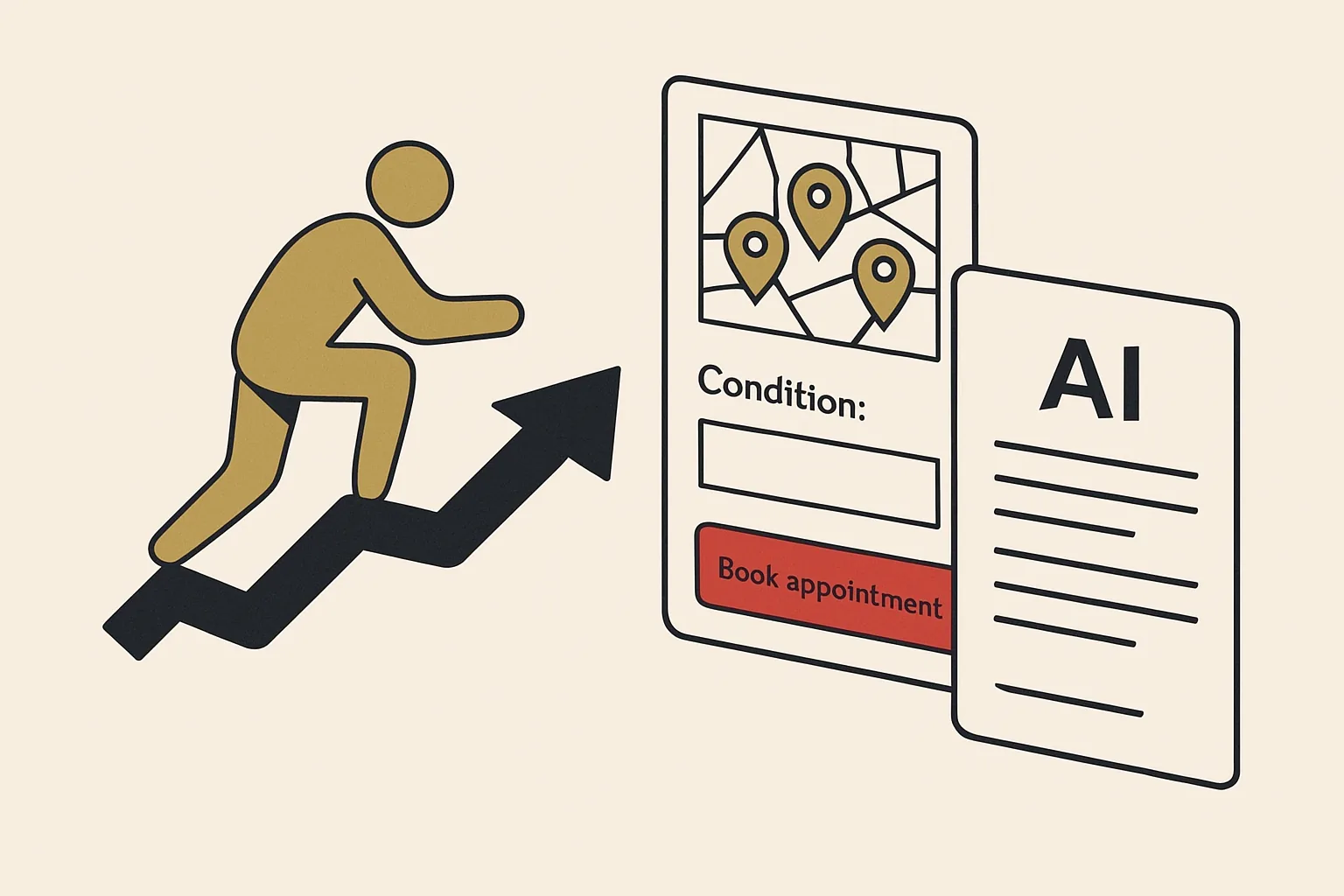
Effective marketing for physiotherapists is no longer about a single brochure site and a steady referral list. It means being the practice that surfaces when a patient searches “physio for back pain near me” or asks an AI assistant who to book for a sports injury, then converting that visibility into booked appointments. We help UK physiotherapy clinics get found for the conditions and injuries that drive private demand, and we measure the result against a baseline rather than asking you to take it on trust.
The referral model is not enough on its own
Physiotherapy practices have built strong businesses on GP referrals and personal recommendations. Both remain valuable. But a growing share of people with back pain, a sports injury or a post-operative rehab need now search directly for a physiotherapist, without waiting for a referral letter. They type their condition into Google. They ask ChatGPT who to book. They look for a practice that clearly treats what they have, has good reviews and can fit them in quickly.
If the clinic is not visible for those searches, it does not get considered. The appointment books elsewhere, and the clinic never knows it lost the enquiry.
This is the gap a Diagnostic reveals: where the practice stands across Google results, the local Map Pack, and the AI engines that increasingly shape which clinic a patient contacts first.
What decides whether a physio clinic surfaces for condition searches
Physiotherapy demand is organised around conditions and injuries, not around “physiotherapist” alone. Patients search for back pain treatment, sports injury rehab, post-operative physio, sciatica. Each carries its own search intent. A clinic with a single “Treatments” page does not capture that breadth. A clinic with condition-specific pages, written for the patient rather than the referrer, stands a considerably better chance.
Three things combine to determine visibility:
- A site built for condition-led discovery. Each treatment area or injury type earning its own clearly structured page, with HCPC registration and CSP membership presented where patients look for them. That is the foundation of our web design work for healthcare practices.
- Local search presence matched to how patients actually search. Google Business Profile optimised for the specific conditions you treat, consistent directory listings, and review signals that confirm the quality of care. That is the core of local SEO for physiotherapists.
- A profile the AI engines can read and trust. When a patient asks an AI assistant which physiotherapist to book for their rotator cuff injury, the answer is built from your whole online footprint, not just your website. Our AI visibility work makes sure the clinic is the named answer for the conditions it treats best.

The private patient demand most clinics are not capturing
NHS referral volumes are outside your control. Private self-pay patients and those with health insurance represent a channel you can grow independently. Patients with back pain, sports injuries or post-operative rehab needs search for a specific physio rather than wait for a referral. They compare on condition expertise, pricing clarity and speed of appointment.
The clinics capturing this are not larger. They are simply better found. A structured SEO programme builds condition-specific visibility that compounds over time.
Why AI search is changing physiotherapy enquiries
Patients with a new injury increasingly ask ChatGPT, Perplexity or Google AI Overviews which physiotherapist to book before they ever open a results page. The answer is a short list of named practices, drawn from each clinic’s site, its reviews and what appears consistently across professional directories. Your clinic is either on that list or it is not, and the patient never sees the practices that were not mentioned.
This is the second place the question is being asked, at machine speed, without anyone in your practice seeing it happen. A Diagnostic measures both: Google results and AI engine answers for your key conditions. The methodology we use is the same across every engagement: measure first, identify the gap, close it, re-measure.
How we measure visibility for a physiotherapy practice
We do not lead with a website rebuild or a referral-marketing plan. We start by measuring where the practice stands: how it ranks for condition and injury searches, how it appears when patients ask AI engines for a recommendation, and what competitors are capturing instead.
That baseline becomes the scorecard. Every quarter we re-measure against the same terms, so progress is visible in the numbers rather than taken on trust.

Where to start
We start with a Tell us about your business: a measured audit of where the practice stands across Google and the AI engines, what local competitors are capturing, and the specific changes that will move private enquiries. You see the evidence before committing to anything ongoing.