Your business can rank at the top of Google and still never be named by ChatGPT, because the two systems do different jobs. Google ranks web pages and hands you a list of links to choose from. Answer engines like ChatGPT, Claude and Perplexity recommend businesses: they read across many sources, build a picture of who you are and what you do, and return a short shortlist of names. A high Google ranking is one signal among many. If the wider picture of your business is thin, inconsistent or missing, the engine has nothing confident to say about you, so it names someone else.
In short, the gap you are seeing is normal, and it is fixable. Here is why it happens and what to do about it.
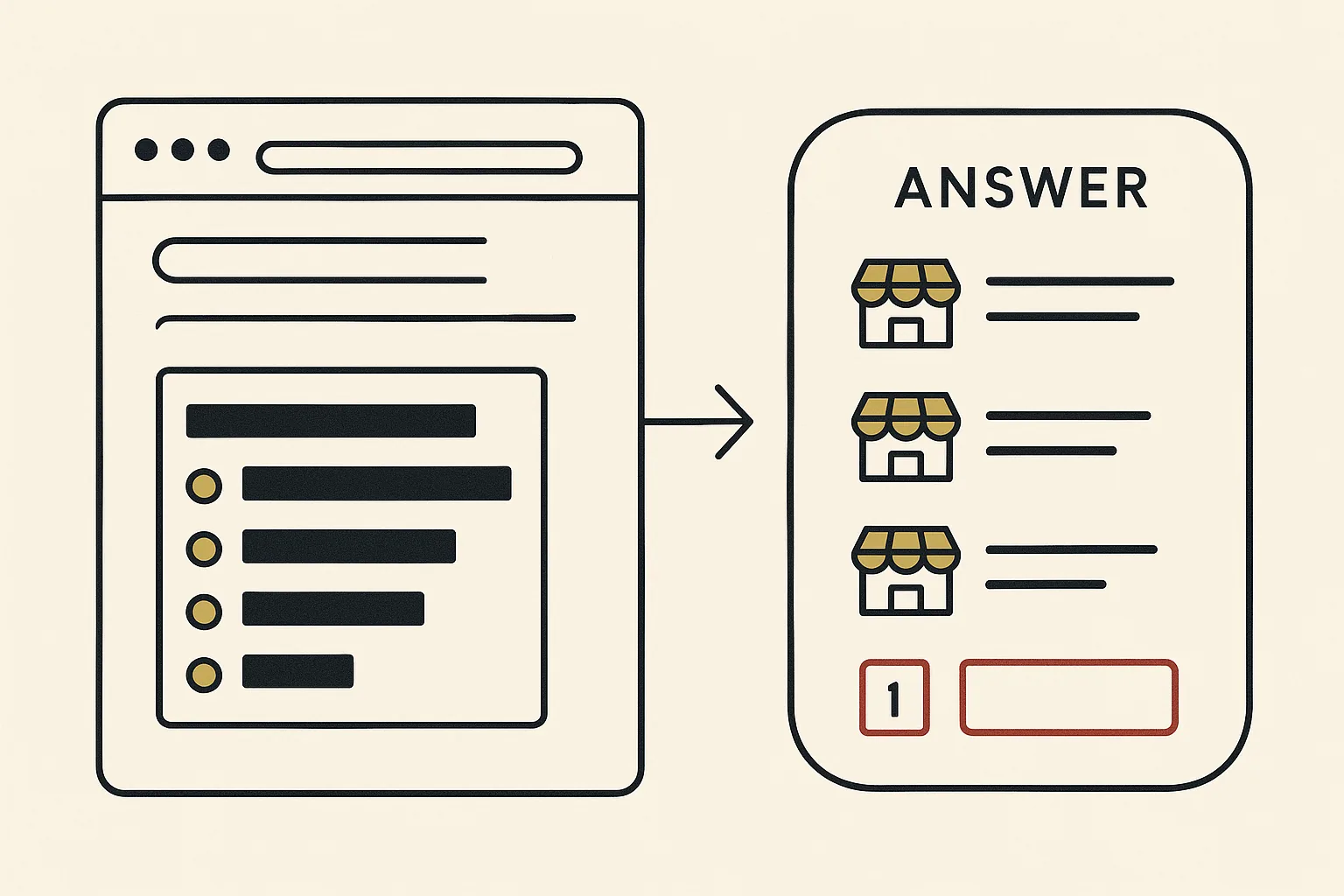
The short version: Google ranks pages, AI engines recommend businesses
A search engine answers “which pages match these words?” An answer engine answers “which businesses should I name?” Those are different questions with different mechanics.
- Google returns ten blue links and lets the person decide. Your page either ranks or it does not.
- ChatGPT, Claude and Perplexity return an answer with a handful of named businesses inside it. There are no blue links to scroll past. You are either in the answer or you are invisible.
This matters because of how people now behave. The question “who is the best at this?” is being asked twice. Once by you, when you pitch or update your website. Once by your potential customer, of an AI engine, when they decide who to call. Three to five businesses come back named. Yours, or not. You never see the question being asked. You only see the consequence: the enquiries that did not arrive.
Why ranking on Google does not get you cited by ChatGPT
Answer engines do not simply read the top Google result and repeat it. They assemble an answer from many places at once: your website, online directories, review platforms, news and articles that mention you, and structured data that describes your business in a machine-readable way.
If those sources disagree, or most of them say nothing at all, the engine cannot recommend you with confidence. Models are built to avoid naming a business they are unsure about. Silence is safer for them than a wrong recommendation. So the business with the clearest, most consistent footprint gets named, even if it ranks below you on Google.
Research backs this up. The Princeton-led study on Generative Engine Optimization (Aggarwal et al., presented at KDD 2024) found that content which cites sources, includes relevant statistics and reads with authority is significantly more likely to be quoted by generative engines. None of those signals are the same as a keyword ranking. You can win the ranking and still lose the recommendation.
What AI engines actually use to decide who to name
When an engine builds its shortlist, four things carry most of the weight. We group them as the Authority Graph, the connected picture of your business that an engine assembles before it decides whether to name you.
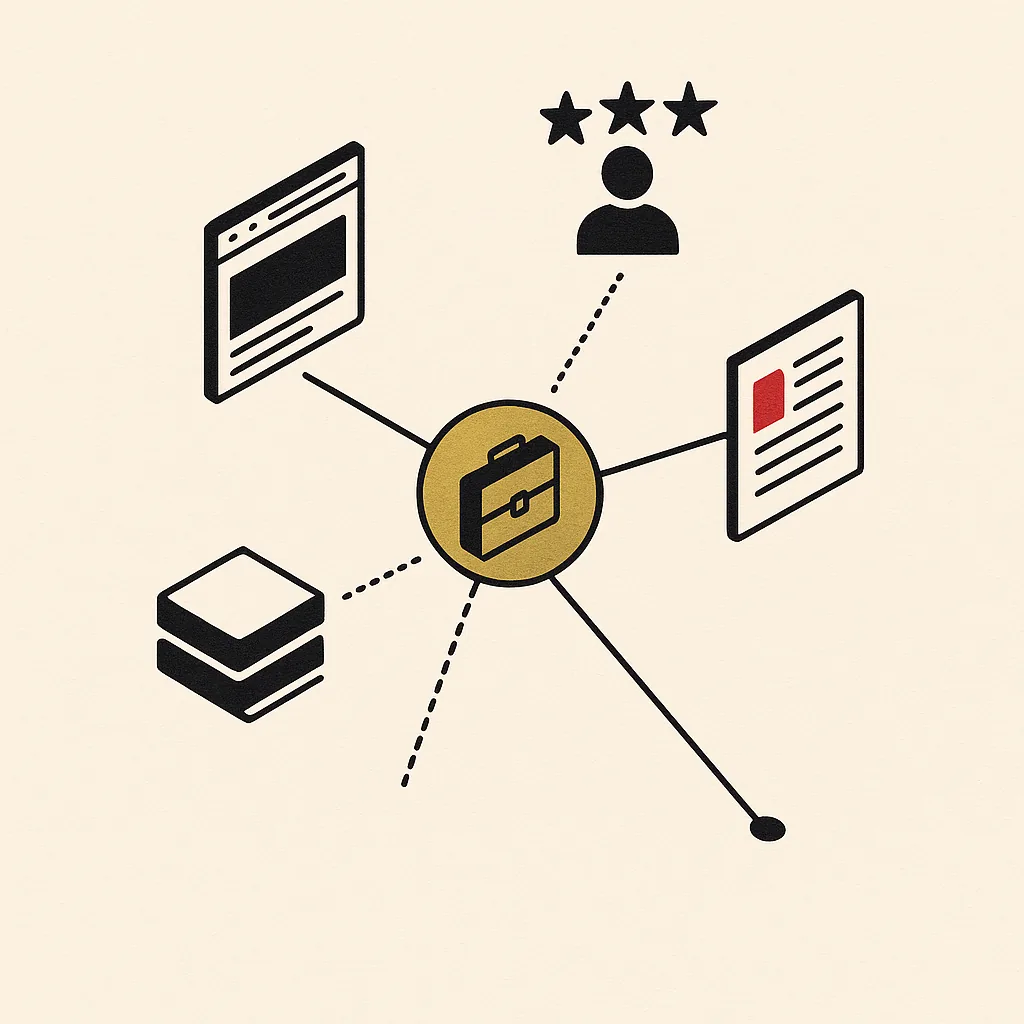
- Entity clarity. Does the web state plainly what your business is, what it does and where it operates? Vague or clever copy that a human enjoys can leave a machine unsure.
- Consistency across sources. Is your name, service and location described the same way on your website, your directory listings and your reviews? Contradictions make an engine hedge.
- Third-party corroboration. Do other credible places mention you, review you or write about you? An engine trusts a business the wider web agrees on.
- Structured, readable content. Is your information laid out so a machine can extract it, with clear answers, headings and a file that tells AI crawlers who you are? This is where Answer Engine Optimisation and a well-formed llms.txt file earn their place.
The pattern underneath all four is consistency. An answer engine is not judging whether you are the best business in your category. It is judging whether the web gives it a clear, agreed, well-evidenced picture it can repeat without risk. That is why a smaller competitor with a tidy, consistent footprint can be named ahead of a larger business that has never tended to its own.
Get these right and you give the engine a confident reason to name you. Leave them thin and you hand the recommendation to a competitor who got them right first.
How to tell if your business is invisible to AI search
You do not need a tool to find out. You need to ask the engines the questions your customers ask.
- Write down ten to twelve questions a potential customer would type, such as “who are the best [your service] in [your town]” or “I need a [your service], who should I call”.
- Run each question through ChatGPT, Claude, Perplexity and Google AI Overviews.
- Record whether your business is named, where in the answer it appears, and whether what the engine says about you is accurate.
The result is your citation rate: the share of those questions where you are named. Most businesses that have never done this work score in the low single figures or zero. That number is your baseline, and you cannot improve what you have not measured. There is a fuller walkthrough in our guide on how to measure AI visibility. If you would rather not run that audit yourself, a Diagnostic does it for you across all four engines and hands you the baseline and the priorities.
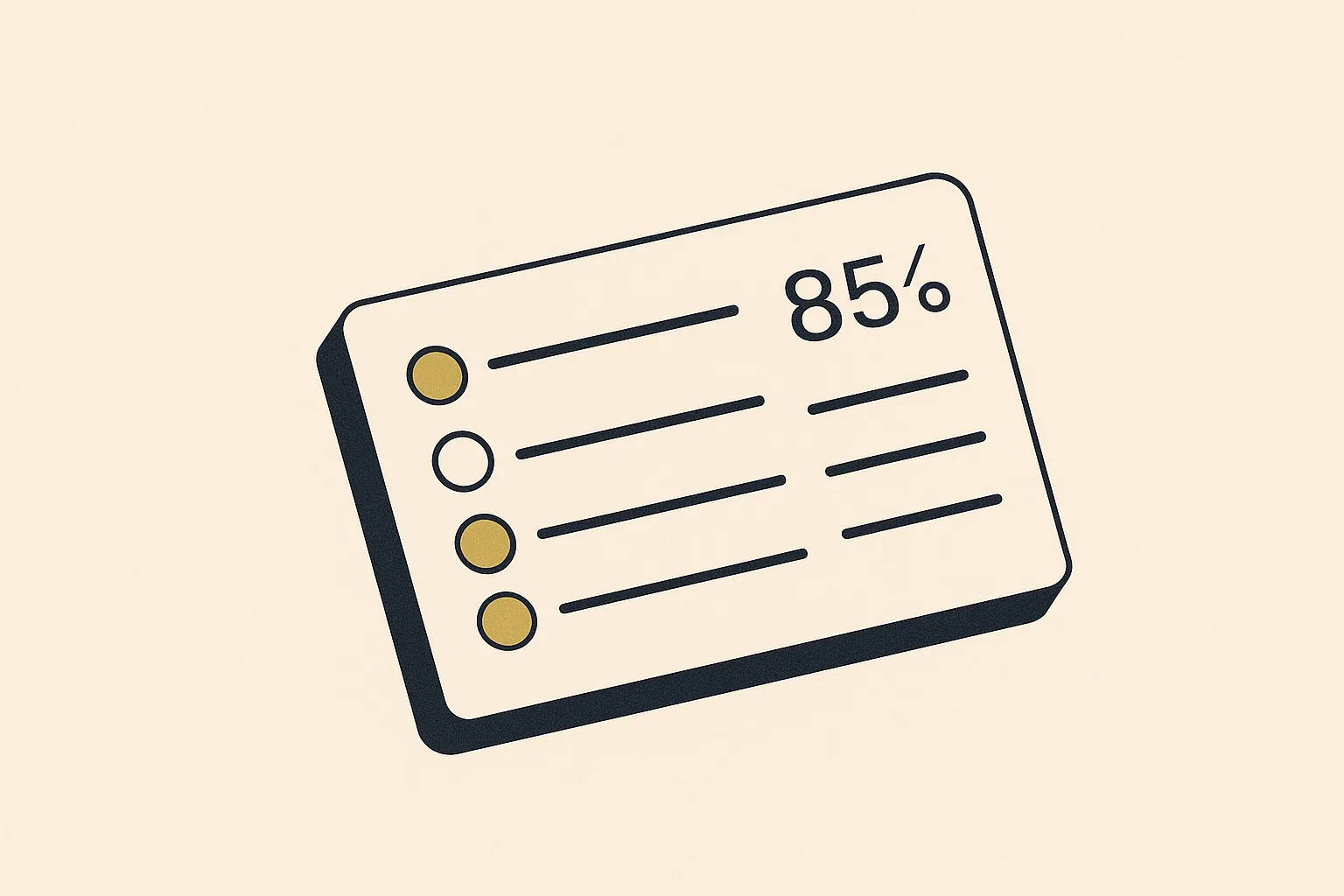
This is not a marketing task you can delegate and forget. When an engine names three businesses in your category and you are not one of them, the customer never asks why. They call the three named. The cost of being invisible is silent, and it compounds with every query.
How to close the gap
The order matters. Measure first, then act.
- Measure. Establish your baseline citation rate across the engines, and note where competitors are named instead of you.
- Make your information unambiguous. Describe your business the same way everywhere, fix contradictions across your website and listings, and add structured data so machines can read you cleanly.
- Earn corroboration. Build the third-party mentions, reviews and content that give an engine more than one source to trust.
- Re-measure. Check again after the engines have had time to re-read the web. Treat it as a quarterly rhythm, not a one-off.
This is the work behind a Diagnostic, our entry-point engagement that audits what the AI engines and search results currently say about your business, shows you the gap, and tells you what to do about it before you commit to anything ongoing. It is diagnostic, not a sales call.
We have seen the gap close in practice. In our work with a dance and fitness business, a structured programme of this kind took ChatGPT citations from zero to 92 per cent on the buyer questions that matter, and to 60 per cent across all four major engines combined. The methodology behind that result is set out on our methodology page.
If you suspect you are ranking on Google but missing from the answers your customers actually read, that suspicion is worth testing. Tell us about your business and we will show you exactly where you stand.
Frequently asked questions
Can I pay to appear in ChatGPT results?
No. ChatGPT, Claude and Perplexity do not sell placements in their recommendations the way Google sells ads. You cannot buy your way in. The businesses they name are the ones the engine has enough consistent, corroborated information about to recommend with confidence.
Why does my competitor appear in ChatGPT when I don't?
Usually because the wider picture of their business is clearer and more consistent than yours. They are described the same way across their website, directories, reviews and third-party mentions, so the engine can recommend them without hedging. The fix is to make your own information just as unambiguous.
Does ranking number one on Google help me appear in AI search?
It helps, but it is not enough on its own. A strong Google ranking is one signal an answer engine may consider, but these engines build their answer from many sources at once. A business with weaker rankings but clearer, more consistent information can be named ahead of you.
How do I check whether ChatGPT recommends my business?
Ask the engines the questions your customers would ask, such as 'who are the best [your service] in [your area]', across ChatGPT, Claude, Perplexity and Google AI Overviews. Record whether you are named, where, and what is said. That gives you a baseline citation rate to improve from.
How long does it take to start appearing in AI answers?
There is no fixed timeline, because the engines re-read the web on their own schedule. In practice, the work of making your information consistent and well structured tends to show up over weeks to a few months, not days. Measuring quarterly is the sensible rhythm.
Is appearing in ChatGPT the same as SEO?
Related, but not the same. Traditional SEO earns you a ranking and a click. Answer Engine Optimisation (AEO), the practice of making your business visible to AI search engines, earns you a mention in the answer itself. You need both, because customers now use both.