ChatGPT vs Google is not a fight over the same job. The gap between the two is not technical, it is structural. Google hands buyers a list of links and lets them decide. ChatGPT, Claude and Perplexity hand buyers a shortlist with a recommendation already inside it. Your business is either named in that shortlist, or it is not considered at all. The same buyer, asking the same question, gets a completely different experience depending on which tool they use, and many buyers now use both in the same session.
This post explains exactly how the two systems differ, why you need visibility in both, and what signals each one is reading when it decides whether to name you.
Google and ChatGPT do fundamentally different jobs
Start with what each system is actually trying to do, because that shapes everything else.
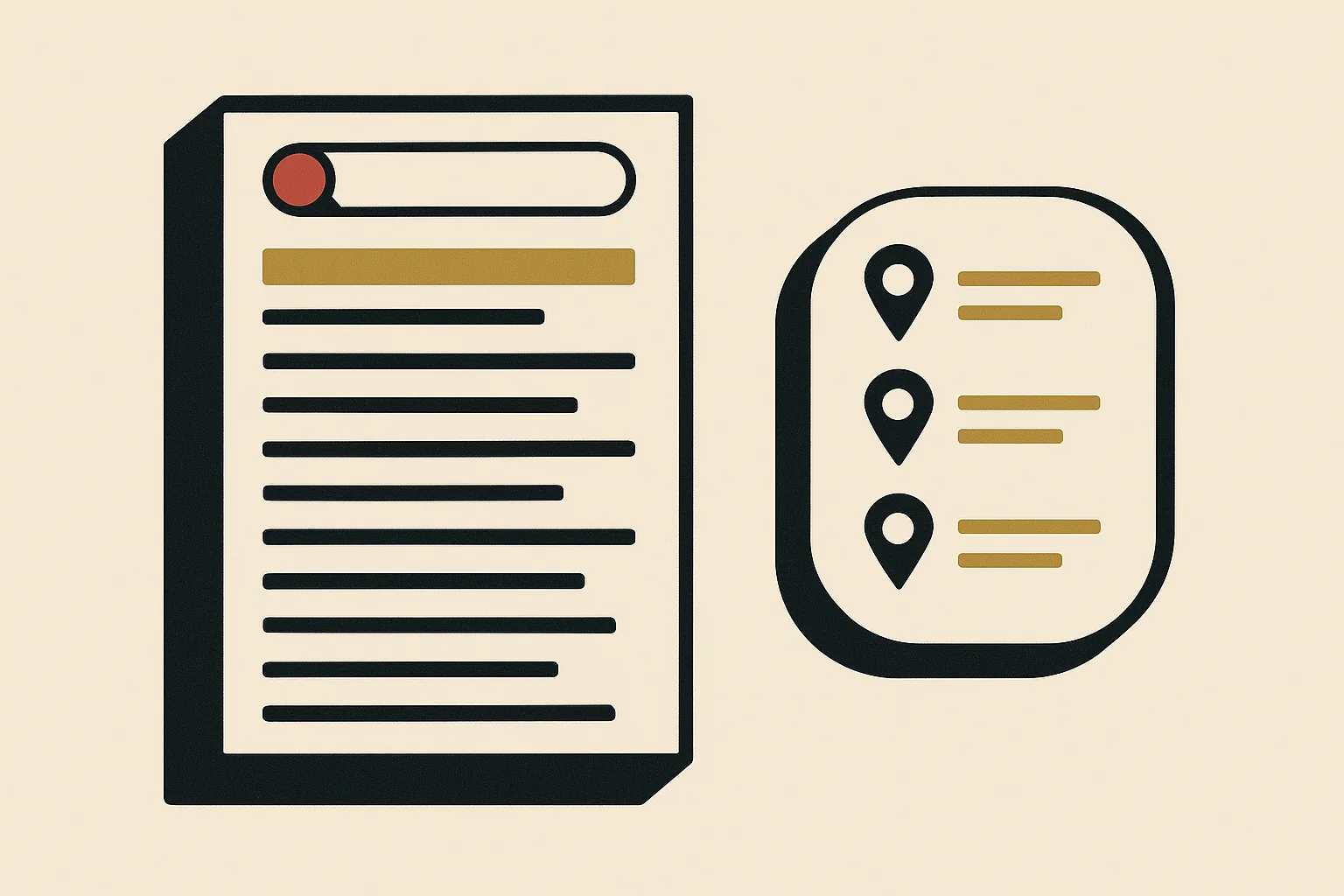
Google is a link-retrieval engine. You type a query, it matches pages to your words, and it returns a ranked list of URLs. Ten blue links (and sometimes ads, map packs, or featured snippets above them) that you scroll through and click. Google is explicitly agnostic about which of those links you choose. It surfaces options; you decide.
ChatGPT, Claude and Perplexity are answer engines. You ask a question, they synthesise information from multiple sources and return an answer in natural language. When you ask “which accountant should I use in Bristol?” or “who are the best fit-out companies in London?”, the engine does not return a list of web pages. It names businesses. Three or four, typically. The shortlist is the product.
This is the structural shift that changes the discovery landscape for every business owner. Google rankings determine whether your page appears in a list. AI engine citations determine whether your business name appears in an answer. These are different outcomes that require different signals.
How the two systems decide who to show
The mechanics behind each channel are worth understanding, because they explain why a business can be visible in one and invisible in the other.
Google’s ranking algorithm primarily reads on-page signals (keywords, headings, internal links, page speed), off-page signals (backlinks from other websites), and behavioural signals (whether users click your result and stay). Build a well-structured website with pages that match search intent, earn links from credible sites, and you have a working Google strategy.
AI engines do something different. Before they name a business, they assemble a picture of it from many sources at once: the business website, online directories, review platforms, third-party articles and mentions, and structured data that describes the entity in a machine-readable format. They are not asking “which page matches these words?” They are asking “which businesses does the web agree are credible, clear and consistent enough for me to name without risk?”
A business with thin representation across those sources, or one whose information contradicts itself across different platforms, gives the engine nothing confident to say. So the engine says nothing. Or it names a competitor whose picture is clearer.
This is why strong Google rankings do not automatically translate into AI visibility. They are one signal among many, not sufficient on their own.
The buyer journey has changed, and most businesses have not noticed
The pattern most buyers follow now looks something like this.
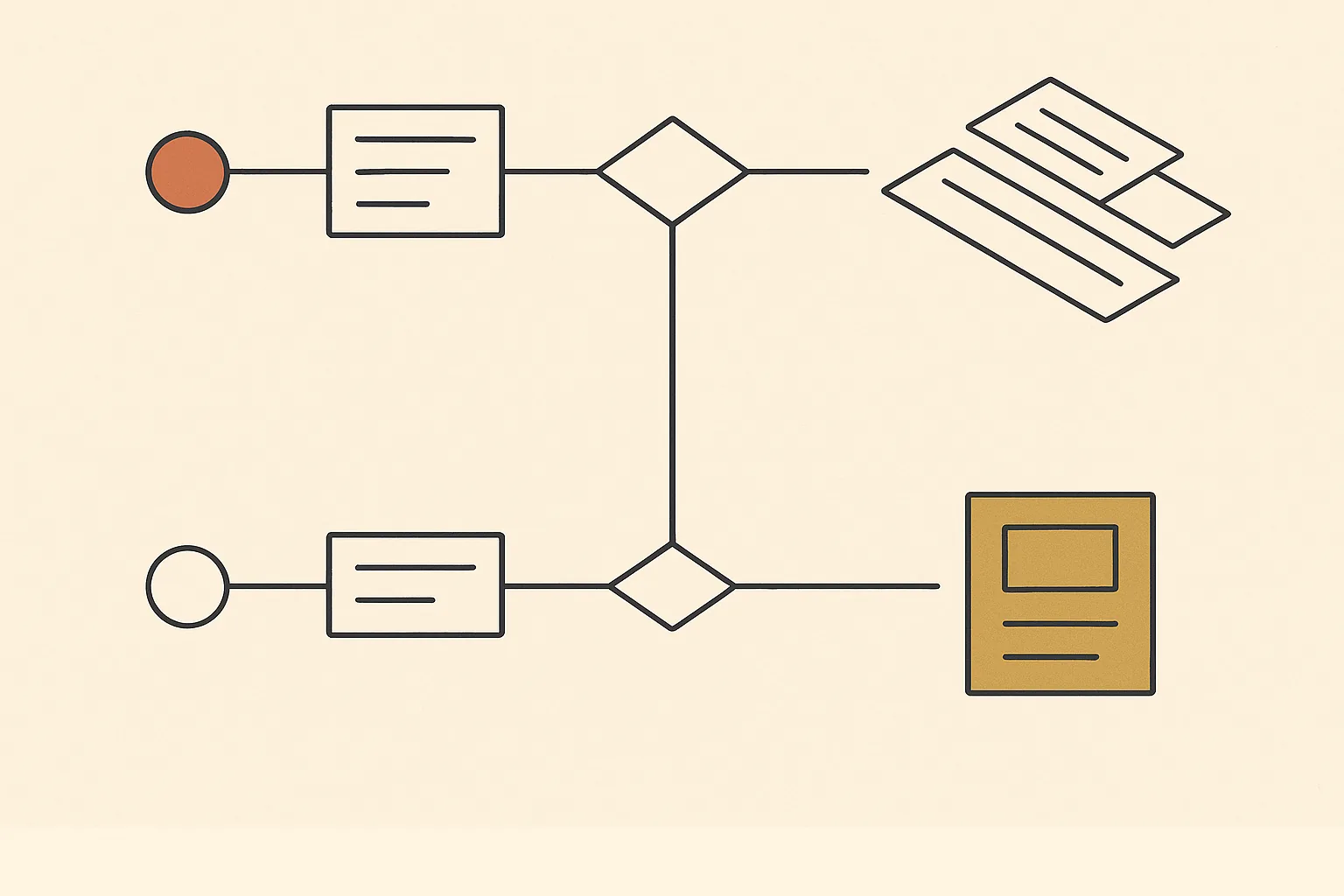
They open an AI engine and ask a question in natural language: “Which marketing agencies in Manchester specialise in professional services?” The engine returns an answer naming three or four firms. The buyer notes the names. Then they open Google (or go directly) to look up each one and verify. They visit websites, read reviews, check LinkedIn.
The AI engine sets the shortlist. Google and direct navigation do the verification. If your business is not named in the first step, the buyer never reaches the verification step at all.
Notice what this does to the buyer’s path. The AI engine forms the shortlist; Google and direct visits only confirm it. By the time anyone reaches your website, the field has already been narrowed to the three or four names the engine returned. If yours was not one of them, the verification step you optimised your site for never happens. The shortlist was decided in a conversation your analytics never recorded, and all you see downstream is a quieter inbox.
Most businesses have their Google presence in reasonable shape. Very few have done the work to be consistently named by AI engines. That gap, right now, is an opportunity that will not exist at the same scale in two or three years.
What signals actually matter in each channel
The clearest way to see the difference is to look at the specific signals each channel rewards.
For Google visibility:
- On-page optimisation: keyword-relevant headings, meta titles and descriptions, structured content that matches search intent
- Backlinks: links from credible, relevant external sites that pass authority to your pages
- Technical health: page speed, mobile usability, indexability, Core Web Vitals
- Local signals (where relevant): Google Business Profile completeness, review quantity and recency, local citations
For AI engine visibility:
- Entity clarity: does your website (and the web more broadly) state clearly what your business is, what it does, and where it operates? Vague positioning copy that a human enjoys reading can leave a machine genuinely unsure
- Cross-source consistency: is your name, service description and location information the same across your website, directories, review platforms and third-party mentions? Contradictions reduce confidence
- Third-party corroboration: does the wider web mention you, review you, or write about you? An engine trusts a business the rest of the web agrees on
- Structured and readable content: is your information laid out so machines can extract it cleanly, with clear answers, headings, and where relevant, a file that tells AI crawlers who you are and what you cover (this is where Answer Engine Optimisation earns its place)
The overlap between these two lists is real but partial. Work done to improve Google visibility does not automatically improve AI visibility, and vice versa. The businesses that will dominate both channels over the next few years are the ones investing in both sets of signals now.
Which channel matters more for your business?
For any business acquiring clients through search, the answer is almost certainly both. But the weight of each channel depends on your situation.
If your buyers are using transactional queries with clear commercial intent (“accountant near me”, “web designer in Edinburgh”), Google is still generating a high proportion of that traffic and those conversions. Strong local SEO and well-optimised service pages remain the foundation.
If your buyers are using consultative or comparison queries (“which SEO agency understands professional services”, “what should I look for in a fit-out company”), AI engines are playing an increasing role in setting the shortlist before any clicking happens. These are exactly the queries where a clear, consistent business footprint in AI engines translates directly into inclusion on the consideration list.
The practical implication: audit both. The gaps are often in different places than you expected.
The practical starting point
You do not need to overhaul everything at once. The useful entry point is measurement: find out where you actually stand in both channels before deciding where to focus.
For Google, run a basic search for the queries your buyers are most likely to use and record whether you appear, where, and what your listing says. Check your Google Business Profile for completeness and accuracy.
For AI engines, ask the questions your customers would ask across ChatGPT, Claude, Perplexity and Google AI Overviews. Record whether you are named, where in the answer you appear, and what the engine says about you. That is your citation rate baseline, the starting point for any AI visibility work.
Our guide on why businesses appear in Google but not ChatGPT goes deeper on the mechanics of the AI side.
What a Diagnostic covers
A Diagnostic is our entry-point engagement for businesses that want to understand their position in both channels before committing to ongoing work. It audits what search engines and AI engines currently say about your business, where competitors are being named instead of you, and what is creating the gaps.
You receive a briefing document (not a dashboard, not a list of metrics) that tells you what is working, what is not, and what to do about it. The evidence comes first; the recommendations follow from it.
We have seen the work this makes possible. In our client case studies, a structured programme of this kind took AI citation rates from near-zero to strong consistent performance across the queries that drive real buyer decisions. That kind of result requires both channels to be addressed: the Google signals that establish authority, and the AI visibility signals that produce the recommendations. The methodology page sets out how we approach both in sequence.
If you are curious where your business stands across ChatGPT, Google and the other AI engines your buyers are using, a Diagnostic gives you a clear, actionable picture. Tell us about your business and we will show you exactly where you stand.
Frequently asked questions
Is ChatGPT replacing Google for business searches?
Not replacing, but running alongside it. A growing share of buyers use AI engines like ChatGPT, Claude and Perplexity to get a named recommendation before they ever open a search results page. Both channels matter. Optimising for one while ignoring the other means you are invisible to part of your market.
Do I have to choose between Google SEO and AI visibility?
No. The signals that help AI engines recommend you, such as clear, consistent information across your website and third-party sources, also support strong Google rankings. The two are complementary. The businesses that invest in both will dominate in both channels.
Why does Google show my business but ChatGPT does not name it?
Google returns pages that match search words. ChatGPT recommends businesses it has enough consistent, corroborated information about to name with confidence. You can rank well on Google and still be invisible to AI engines if the wider picture of your business is thin or contradictory across directories, reviews and third-party mentions.
How do I know which channel my customers are using?
In practice, many buyers use both in the same session: an AI engine to get a shortlist of names, then Google or direct navigation to verify each one. You need visibility in both. A Diagnostic maps your current citation rate across ChatGPT, Claude, Perplexity and Google AI Overviews, so you can see exactly where you are named and where you are not.
Does it matter what ChatGPT says about my business?
Yes. If an AI engine names you, it also describes you. Buyers are reading those descriptions and forming first impressions before they visit your site. If the engine's summary of your business is vague, outdated or simply wrong, that shapes the buyer's expectations in a way you cannot see or correct in real time.
What is the single most important difference between the two channels?
Google hands buyers a list and lets them decide. AI engines hand buyers a shortlist with a recommendation baked in. On Google, every business with a good ranking gets a click-through opportunity. On an AI engine, only the businesses named in the answer get considered. If you are not in the answer, you are not in the consideration set.