Your competitor appears in ChatGPT’s answer. You do not. The reason is not that they are better at their job, or that they have outspent you, or that they did something clever last month. The reason is that the AI engine has a clearer, more consistent picture of their business than it has of yours, and so it names them when your potential customer asks. That is fixable. But fixing it starts with understanding what AI engines actually look at when they decide who to recommend, and where the picture of your business falls short.
In short: your competitors are showing up because the wider evidence about their business is easier for an engine to trust. Here is what that means in practice, and how you close the gap.
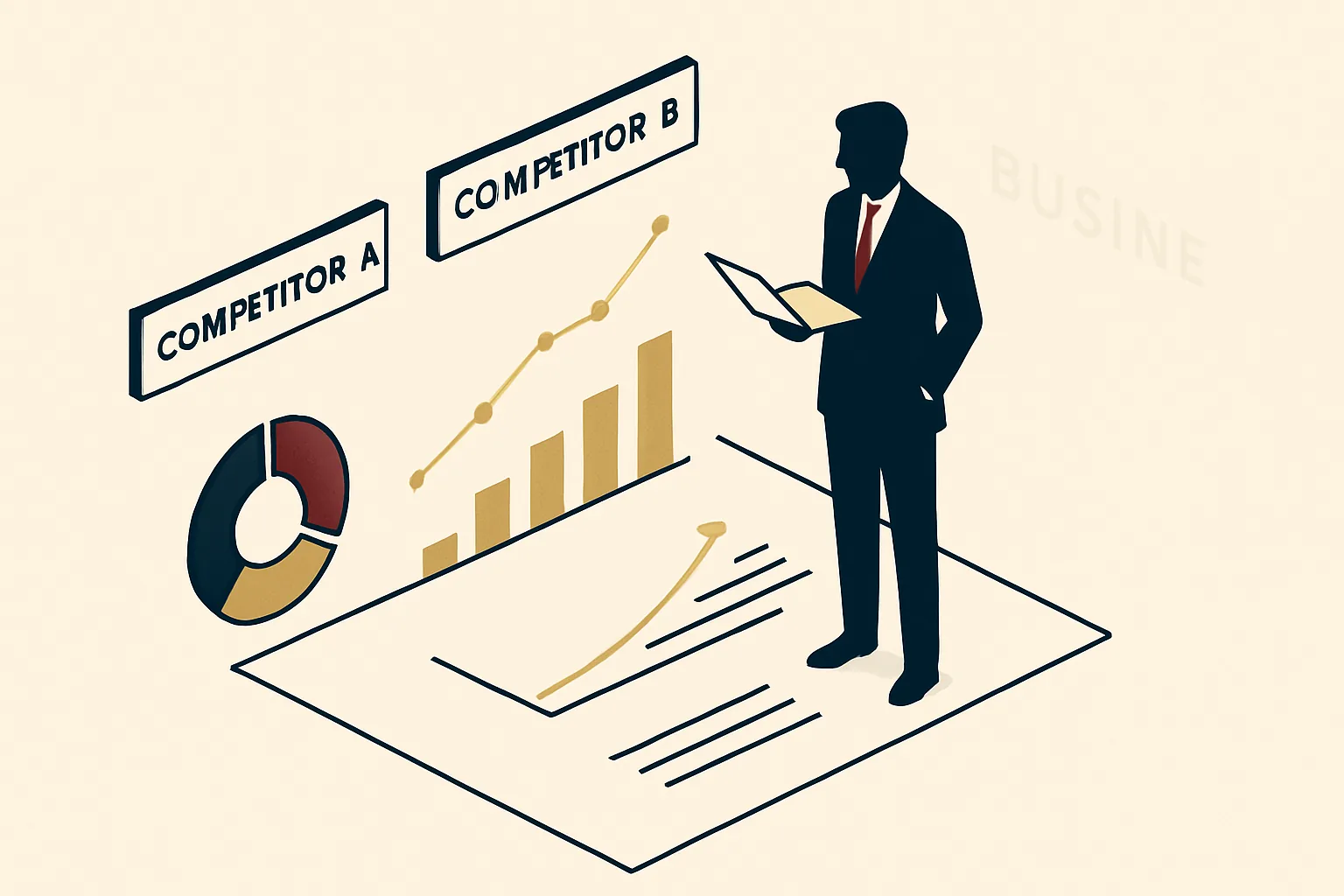
Why AI engines name some businesses and not others
ChatGPT, Claude, Perplexity and Google AI Overviews do not search for the best business in your category. They search for the business they can describe with confidence. An engine that names the wrong business damages its own reputation. So the businesses it names are the ones the wider web agrees on, not the ones that are objectively best.
When a potential customer asks “who are the best [your service] in [your area]”, the engine pulls from many sources at once: your website, your Google Business Profile, online directories, review platforms, news mentions, and any structured data that describes what your business does and where it operates. It cross-references those sources. Where they agree, confidence is high. Where they contradict each other, or where most of them say nothing at all, confidence drops and the engine hedges by naming someone else.
This is why you can rank well on Google and still be invisible in AI answers. A Google ranking is one signal. An AI citation requires a much broader picture: consistent information across many sources, third-party corroboration, and clear structured signals that tell the engine what your business is without ambiguity.
Your competitors are showing up because, across that broader picture, their information is better organised than yours. Not smarter, not more expensive. Better organised.
What the consistent competitor does differently
When we look at businesses that appear reliably in AI answers, four patterns come up again and again. We call the connected picture that produces these patterns the Authority Graph: the network of consistent, corroborated information an engine assembles before it decides whether to name you.
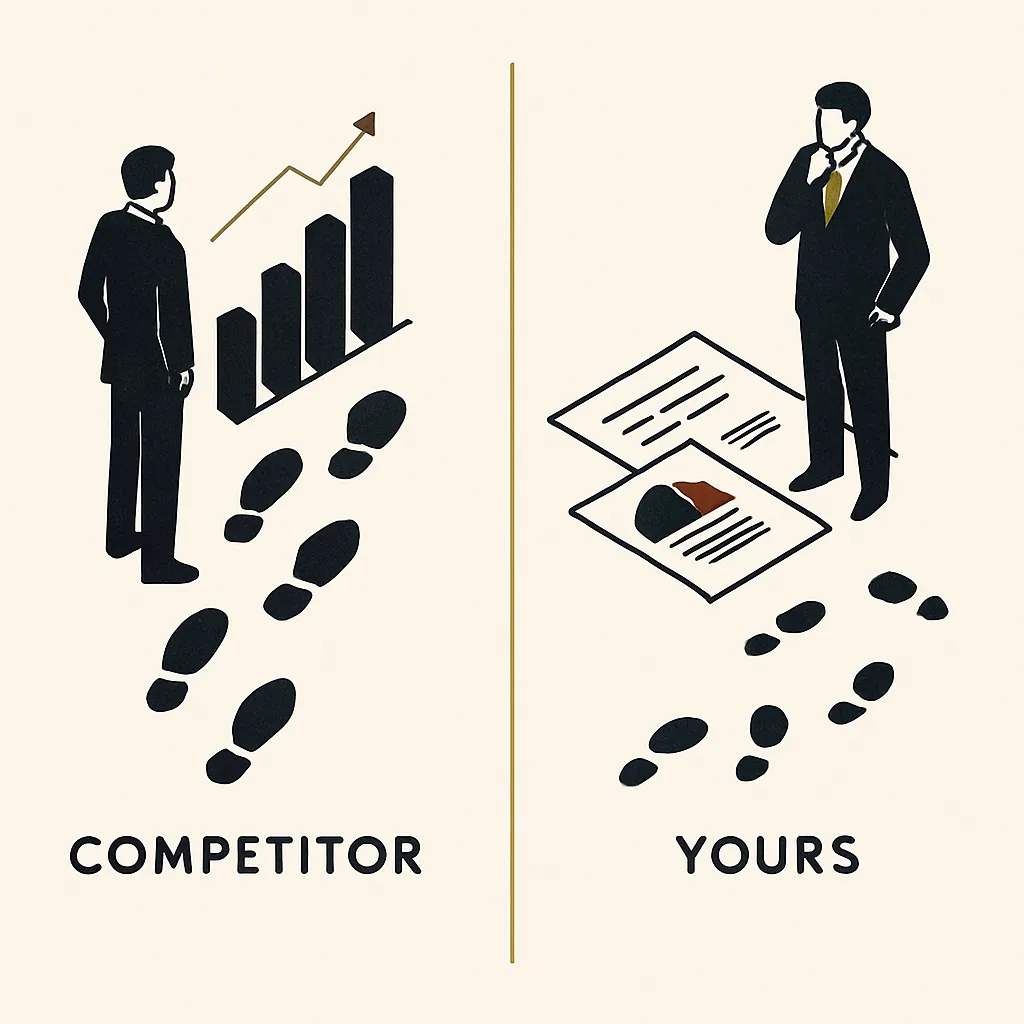
They describe themselves the same way everywhere. Their name, their core service, their location, and the problems they solve for customers read identically across their website, their Google Business Profile, their directory listings, and their review responses. No engine has to guess what they do.
They have third-party corroboration. Articles, local press mentions, review platforms with substantive responses, and directory entries on the platforms that carry weight in their sector. The engine does not have to rely solely on what the business says about itself. Other credible sources say the same things, which builds trust.
Their website answers the questions customers ask. Their pages go beyond keyword optimisation and directly answer the question in a way a machine can extract. Clear headings, plain descriptions, and structured markup tell an engine the category, location, and service without having to interpret clever copy.
They have tended to the machine-readable layer. This is where Answer Engine Optimisation and a well-formed file that tells AI crawlers about your business in their own language earns its place. It is not magic, but it closes the gap between what your business does and what the engine can state with confidence.
Your competitor has those four patterns in place. You may not. That is the whole of the difference, and it plays out every time a buyer asks an engine who to call. Three to five businesses come back named, theirs among them, yours absent, and the buyer acts on the names they were given. You never witness the query. You see only its result: the enquiries that went to the firms the engine could describe with confidence.
This is a business risk, not a marketing task
When an AI engine names three businesses in your category and yours is not one of them, the buyer never asks why. They call the three named. This is not a visibility problem you can hand to your marketing team and forget: the queries run, the shortlists form, and the calls go elsewhere, all without your phone ringing.
The competitors being named ahead of you may not even be aware it is happening. They have simply done the groundwork: keeping their listings consistent, earning reviews that describe their work in substance, writing content that answers real questions rather than stuffing keywords. That groundwork has compounded into a consistent footprint. Yours has not, yet. And the gap widens with every query, because there is no missed-call log for AI recommendations to warn you it is happening.
How to find out exactly where you stand
The starting point is measurement. A Diagnostic does this for you across all four major engines, but you can also run a basic audit yourself.
Write down ten to twelve questions a potential customer would ask: “who are the best [your service] in [your area]”, “I need a [your service], who would you recommend”, “which [your service] businesses are worth contacting”. Run each question through ChatGPT, Claude, Perplexity and Google AI Overviews. Record which names appear in each answer. Note whether your business is named, and if it is, what the engine says about you.
What you will see is your citation rate: the share of those questions where you appear. Most businesses that have not done this work score in the low single figures or zero. You will also see, clearly, which competitors are appearing in your place.
That list of competitor names is the map of who the engines trust more than they trust you right now. The question is why. Usually it comes down to one or more of the four patterns above: their information is more consistent, more corroborated, better structured, or more clearly machine-readable than yours.
There is a fuller walkthrough of how to run this measurement in our guide on how a business disappears from AI search despite ranking on Google.

How to close the gap
The order that works is: measure, fix the foundations, build corroboration, and re-measure. In that sequence, not the reverse.
Measure first. Establish your citation rate and your competitor citation map, as above. Without that baseline you cannot tell whether anything you do is working, or where the largest gaps sit.
Fix the information layer. Describe your business the same way everywhere. Audit your website, your Google Business Profile, your directory listings, and your review responses for contradictions, omissions, and inconsistencies. Where the web says different things about you, the engine hedges. Fix the contradictions and you remove the hedging.
Build the structured layer. Make sure the machine-readable signals on your website tell an engine clearly what category you operate in, what you do, and where. This is the technical foundation for how to get cited by ChatGPT. It is not complicated, but it requires being deliberate about it.
Earn third-party corroboration. Reviews that describe what you do specifically (not just “great service”), industry directory listings, local press mentions, and content that answers real buyer questions across platforms the engines respect. Each additional credible source that says the same things about your business adds to the engine’s confidence.
Re-measure quarterly. Engines re-read the web on their own schedule. The work you do this month may show up in results over the coming weeks, or it may take longer. The sensible rhythm is a quarterly evidence cycle: measure, act on what has shifted, re-measure. That rhythm is described in our methodology. The businesses named consistently in AI answers did not get there through a single campaign; they built a footprint clear enough for the engine to name them without hesitation.
Where to start
A Diagnostic is the right entry point. It audits what ChatGPT, Claude, Perplexity and Google AI Overviews currently say about your business and your key competitors, identifies the specific gaps in your information footprint, and produces a clear picture of what needs to change. It is diagnostic: you see the evidence before you commit to anything ongoing. Our full AI visibility service describes how the work compounds from that starting point into a quarterly evidence cycle.
In our work with a UK dance and fitness business, a structured programme of this kind took AI citations from zero to 92 per cent on the buyer questions that matter most. The methodology behind that result is described on our methodology page. The same approach applies to any sector where buyers are now starting their shortlisting in an AI engine rather than a search results page.
If you know your competitors are appearing in ChatGPT and you are not, that is the signal to start measuring. Tell us about your business and we will show you exactly where you stand and what it would take to appear alongside them.
Frequently asked questions
Why does ChatGPT keep naming my competitors instead of me?
Because the wider picture of their business is clearer and more consistent than yours across the sources AI engines read. ChatGPT, Claude and Perplexity build their answers by assembling information from many places: your website, directories, reviews, third-party articles, and structured data. If those sources agree clearly on your competitors but say little about you, the engines recommend them and leave you out.
Does it help to rank higher on Google than my competitors?
It helps, but it is not the whole picture. Answer engines do not simply repeat the top Google result. A competitor with a lower Google ranking but a more consistent, corroborated business footprint can be named ahead of you. Google rankings are one signal; AI citations require a broader set of signals working together.
How do I find out which of my competitors are being named by ChatGPT?
Ask the engines the questions your potential customers would ask, such as 'who are the best [your service] in [your area]', across ChatGPT, Claude, Perplexity and Google AI Overviews. Record every name that comes back. That gives you your competitive citation map: who is appearing, how often, and what is being said about them.
Can I pay to get into ChatGPT recommendations?
No. ChatGPT, Claude and Perplexity do not sell placements in their recommendations the way Google sells ads. The businesses they name are the ones they have enough consistent, well-corroborated information about to recommend with confidence. You cannot buy your way in; you have to build the underlying credibility the engine is looking for.
How quickly can I start appearing in AI answers after fixing my footprint?
There is no fixed timeline, because the engines re-read the web on their own schedule. In practice, structural improvements tend to show up over weeks to a few months. Measuring quarterly is the sensible rhythm. The sooner you begin, the sooner your information is available for the next time the engines refresh.
What is a Diagnostic and how does it help with this?
A Diagnostic is Qyliq's entry-point engagement. It audits what ChatGPT, Claude, Perplexity and Google AI Overviews currently say about your business and your key competitors, shows you where you are being named and where you are not, and tells you the specific gaps to close. It is diagnostic: you see the evidence before committing to anything ongoing.